Hill Country Wedding Venues: What to Look for When Booking Small and Affordable
Why does choosing the right small venue matter?
Not all Hill Country wedding venues are built the same. For couples planning a small, budget-conscious wedding, the wrong venue can end up costing more than expected — through minimum spends, required vendors or hours you don't need.
Use the checklist below to evaluate small wedding venues near Austin and Dripping Springs side by side.
1. Does the guest capacity match your guest list?
Look for venues that state a clear guest range (for example, 15–100 guests) rather than a single maximum. A venue designed for a small-to-mid-size range will feel full and warm with 30 people, while a 300-person ballroom will feel empty — and you'll pay for space you don't use.
2. What does the rental fee actually include?
Two venues with the same headline price can be very different once you add the extras. Ask for an itemized list:
- Tables, chairs and linens
- Lighting (string lights, evening use)
- Setup and cleanup time
- Restrooms, parking and a getting-ready space
- Security deposit, insurance and cleaning fees
3. How many hours do you get — and can you pay for less?
Many venues price by the full day. If you're planning an intimate ceremony and dinner, ask whether shorter rentals, weekday rates or off-peak dates are available. Weekday and Sunday events are often discounted.
4. Can you bring your own vendors?
Required caterer and bar lists are one of the biggest hidden costs. A venue that lets you choose your own caterer, food truck or family-style meal gives you far more control over the budget.
5. Is there lodging on site or nearby?
On-site lodging lets the couple and wedding party get ready, host a rehearsal dinner and stay the night without extra transportation. At The Ranch at Bell Springs, the 3-bedroom hilltop home sleeps up to 10.
6. What is the weather plan?
Texas weather changes fast. Ask where the ceremony moves if it rains or the afternoon is too hot — a covered porch, tent space or indoor room — and whether a tent is included or extra.
7. Does the setting do the decorating for you?
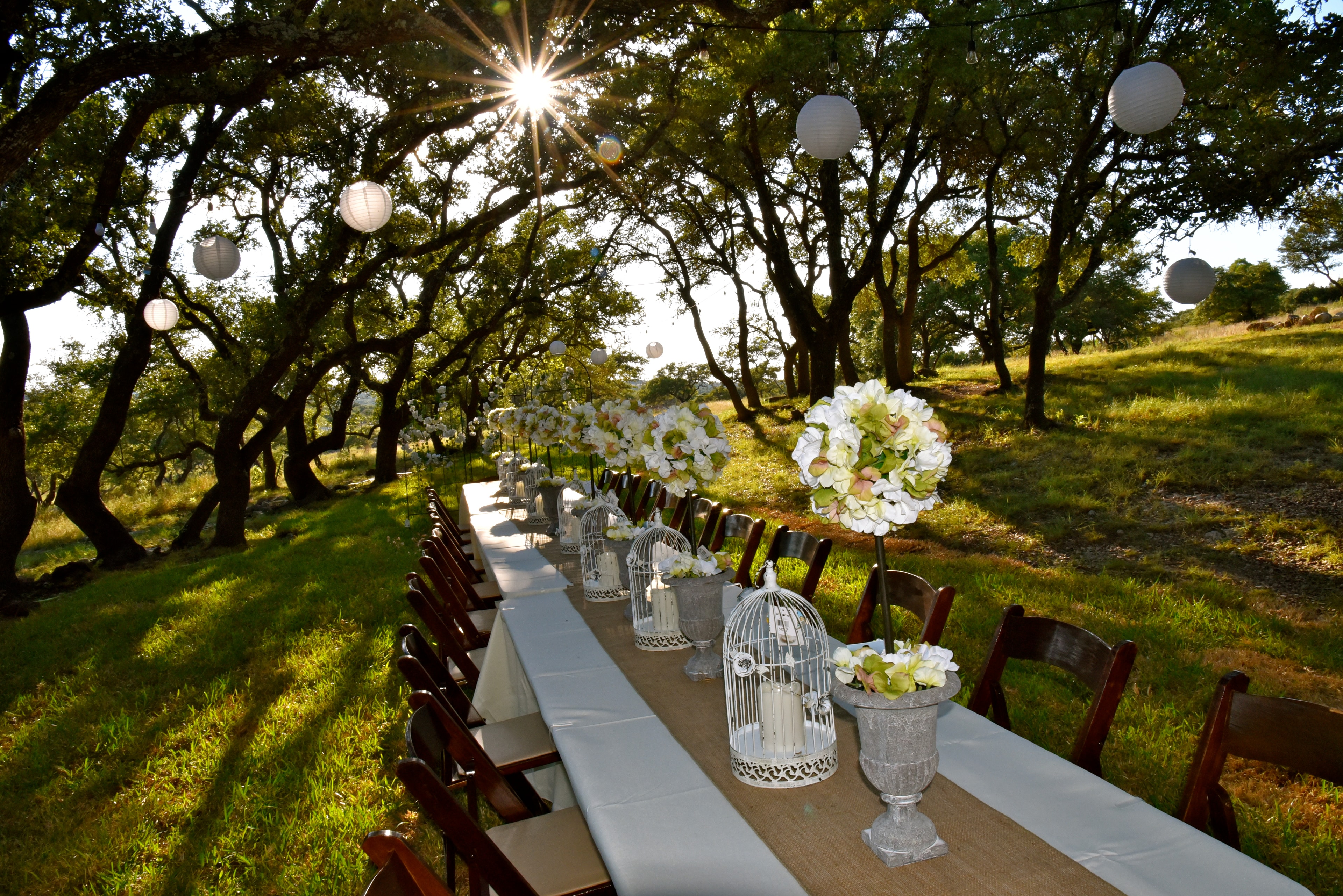
Natural backdrops — live oaks, hill country views, golden-hour light — reduce what you need to spend on florals and décor. Visit at the time of day your ceremony will happen to see the light.
What questions should you ask on a venue tour?
Bring this short list to every tour so you can compare venues on the same terms:
- What is the guest range this space is designed for?
- Which items are included, and which cost extra?
- How many hours are included, and are shorter rentals available?
- Can we use our own caterer, bar and vendors?
- Where does the ceremony move if it rains or is very hot?
- Is there lodging for the couple or wedding party?
- What deposit is required, and what is the cancellation policy?
Frequently asked questions
What is a good guest count for a small Hill Country wedding?
Small Hill Country weddings typically range from about 15 to 100 guests. Choose a venue designed for that range so the space feels full and you aren't paying for capacity you won't use.
How can I save money on a wedding venue near Austin?
Look just outside the city in areas like Dripping Springs, choose a weekday or Sunday date, book a venue that allows outside vendors, and pick a setting with natural beauty so you spend less on décor.
Should I tour a wedding venue before booking?
Yes. Touring at the same time of day as your ceremony shows you the light, shade, sound and parking, and gives you a chance to ask what the rental fee includes.
Do small wedding venues allow outside caterers?
Many small and private venues do, but policies vary. Ask before you book, since a required caterer or bar package can change the total cost more than the rental fee itself.